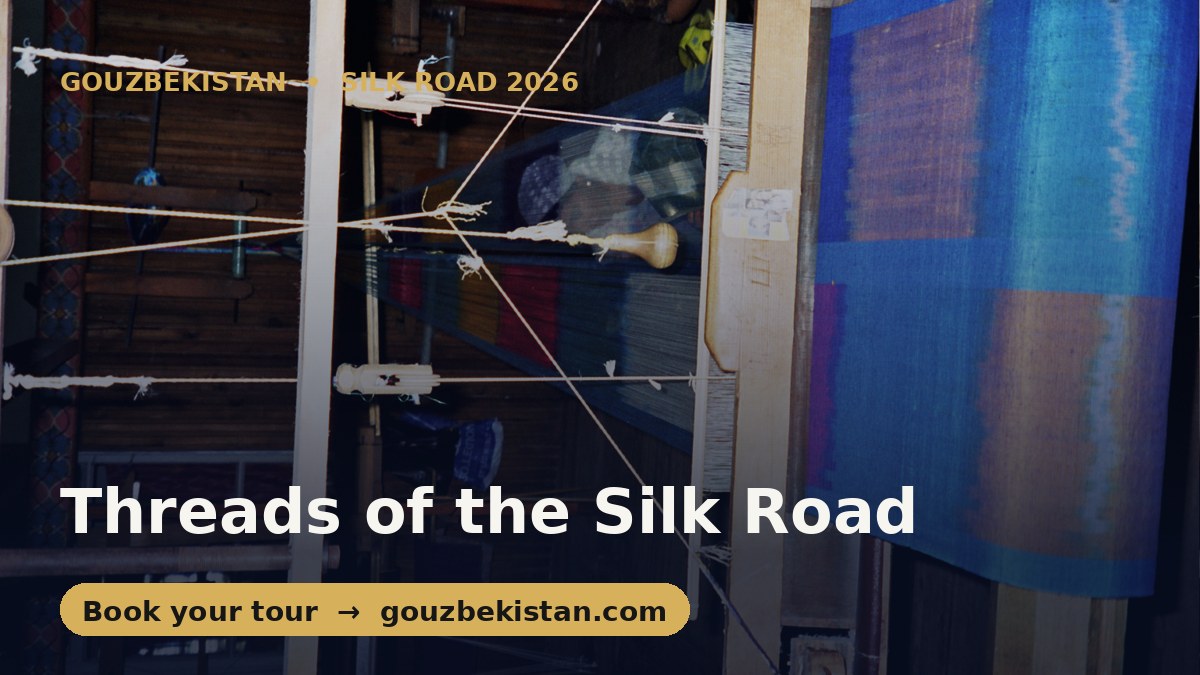
Threads of the Silk Road: Margilan's Hand-Woven Silk
In Margilan, in the Fergana Valley, the Yodgorlik factory still makes silk entirely by hand and a UNESCO-recognised crafts centre keeps ikat atlas and adras weaving alive....
Read more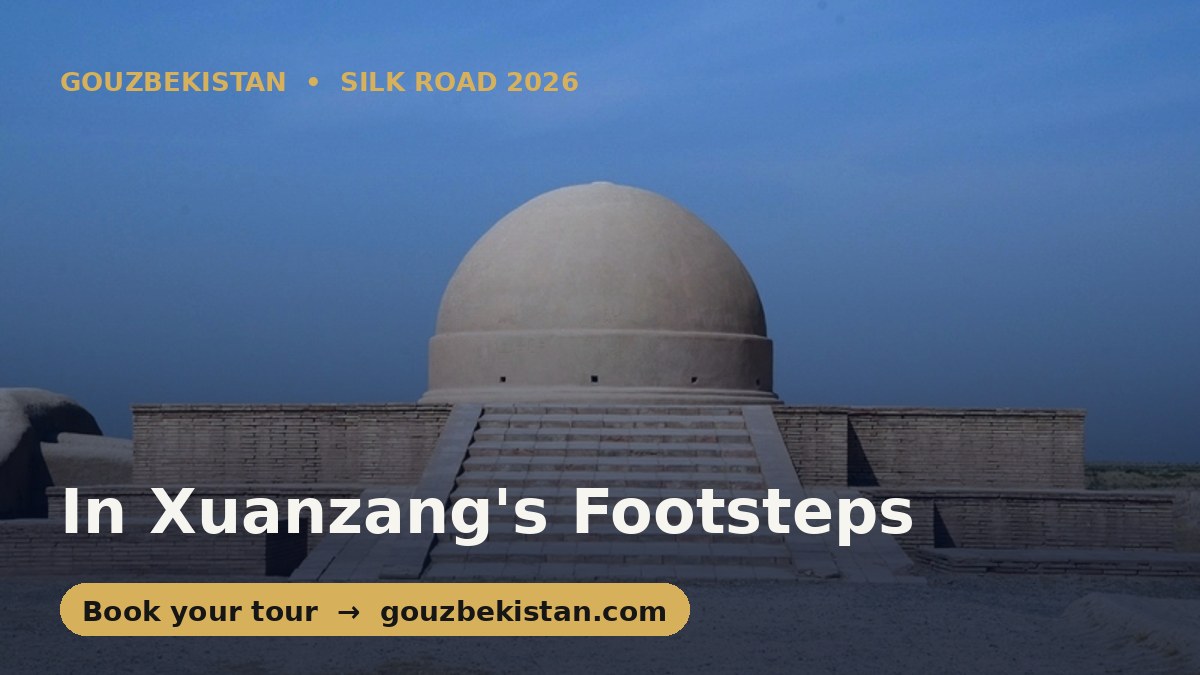
Can you follow Xuanzang's Silk Road route through Uzbekistan today? Yes: the monk of Journey to the West fame crossed the lands of Tashkent, Samarkand, Bukhara and Termez in the 7th century, and Chinese travellers can now fly direct from Xi'an or Shanghai to Tashkent and enter Uzbekistan visa-free for up to 30 days.
Picture a lone monk leaving Chang'an, the city we now call Xi'an, around the year 629. Ahead of him lie deserts, the Tian Shan and the warring Turkic chieftains of Central Asia. Behind him is an emperor who never gave him permission to go. Thirteen centuries later, his footsteps still lead to turquoise domes, Buddhist ruins on the banks of the Amu Darya and caravan cities where the Silk Road feels alive. This is the journey Chinese travellers are now rediscovering in Uzbekistan.
Xuanzang's pilgrimage to India lasted from about 629 to 645. On his return he dictated his travels to his disciple Bianji, and the result, the Great Tang Records on the Western Regions (大唐西域记), was compiled in 646. The book describes 110 countries, regions and city-states, including lands that are today part of Uzbekistan, and centuries later it inspired the Ming-dynasty novel Journey to the West.
According to his biographers, after crossing the Tian Shan and meeting the khagan of the Western Turks, Xuanzang continued to Tashkent and then crossed the "countries" of Samarkand and Bukhara before turning south towards Tukhara. He described monasteries, Buddha footprints and cities beside rivers and lakes, separated by vast empty steppe with little water or grass. Walking through Samarkand today, between the Registan and the old Sogdian city of Afrasiyab, you are standing on the same crossroads he described.
The most moving stop for many Chinese visitors is Termez, in the far south of Uzbekistan. Xuanzang recorded that Termez had "about ten sangharamas with about one thousand monks", and that its stupas and Buddha images were known for spiritual manifestations. The ruins are still there.
Fayaz Tepe, about 15 km west of Termez, is a Buddhist monastery whose foundations date to the 1st century CE, with a peak of activity in the 3rd and 4th centuries under the Kushans. Its reconstructed stupa rises from the plain, and finds from the site include a famous image of the Buddha with monks. Nearby Kara Tepe, another monastery complex in Old Termez, is the source, together with Fayaz Tepe, of most known Kushan-era inscriptions in the area. In the city, the Archaeological Museum of Termez displays wall paintings, sculptures and coins from the Graeco-Bactrian and Kushan periods.
For a Chinese family, a Buddhist culture tour of Uzbekistan is not an exotic detour; it is a return to a story learned in childhood, from the Monkey King to the real monk who walked this road.
Getting here has never been easier. Since 1 June 2025, citizens of China and Uzbekistan can visit each other without a visa for up to 30 days per trip (and no more than 90 days in any 180-day period). China Eastern Airlines launched Xi'an–Tashkent flights in July 2025, so you can literally start where Xuanzang started. Since 30 March 2026 the airline has also flown Shanghai–Tashkent four times a week, on Mondays, Tuesdays, Thursdays and Saturdays, with a flight time of about eight hours.
Chinese travellers have noticed. Official figures from Uzbekistan's Tourism Committee show that from January to September 2026 the country welcomed 10.3 million foreign visitors, and arrivals from China grew 2.1 times compared with the same period a year earlier, the strongest growth of any market.
A classic 8–10 day route can trace the monk's path in comfort:
GoUzbekistan is a licensed tour operator with offices in Tashkent and Bukhara, operating since 2007. We arrange licensed guides (ask us about language options), hotels, domestic transport and private transfers, and build the route around your dates. Start with our historical tour through Uzbekistan or Hidden Gems of Uzbekistan, then create your own custom tour or explore our tours. Contact us on WhatsApp at +998 93 963-00-00 or info@gouzbekistan.com.
اكتشف سمرقند وبخارى وخيوة على طريق الحرير مع برنامج مصمم خصيصاً لك ولعائلتك. نرتب لك الفنادق والمرشدين والتنقلات من البداية إلى النهاية. صمّم رحلتك إلى أوزبكستان الآن.
Erleben Sie Samarkand, Buchara und Chiwa auf einer Seidenstraße Rundreise, ganz nach Ihren Wünschen geplant. Wir organisieren Hotels, Reiseleitung und Transfers vor Ort. Jetzt Ihre Usbekistan Reise planen.
Recorra la Ruta de la Seda entre Samarcanda, Bujará y Jiva con un itinerario hecho a su medida. Nos encargamos de hoteles, guías y traslados. Diseñe su viaje a Uzbekistán.
Partez sur la Route de la Soie, de Samarcande à Boukhara et Khiva, avec un circuit sur mesure. Hôtels, guides et transferts sont organisés pour vous. Créez votre voyage en Ouzbékistan.
沿着丝绸之路探访撒马尔罕、布哈拉和希瓦,享受为您量身定制的行程。酒店、导游和交通由我们在当地统一安排。立即定制您的乌兹别克斯坦之旅。
Самарканд, Бухара и Хива на Шёлковом пути — индивидуальный маршрут под ваши даты и бюджет. Мы берём на себя отели, гидов и трансферы. Создать свой тур в Узбекистан.
In Margilan, in the Fergana Valley, the Yodgorlik factory still makes silk entirely by hand and a UNESCO-recognised crafts centre keeps ikat atlas and adras weaving alive....
Read moreThe monk behind Journey to the West crossed Tashkent, Samarkand, Bukhara and Termez in the 7th century. Today Chinese travellers fly direct from Xi'an or Shanghai and enter Uzbekistan visa-free for 30 days....
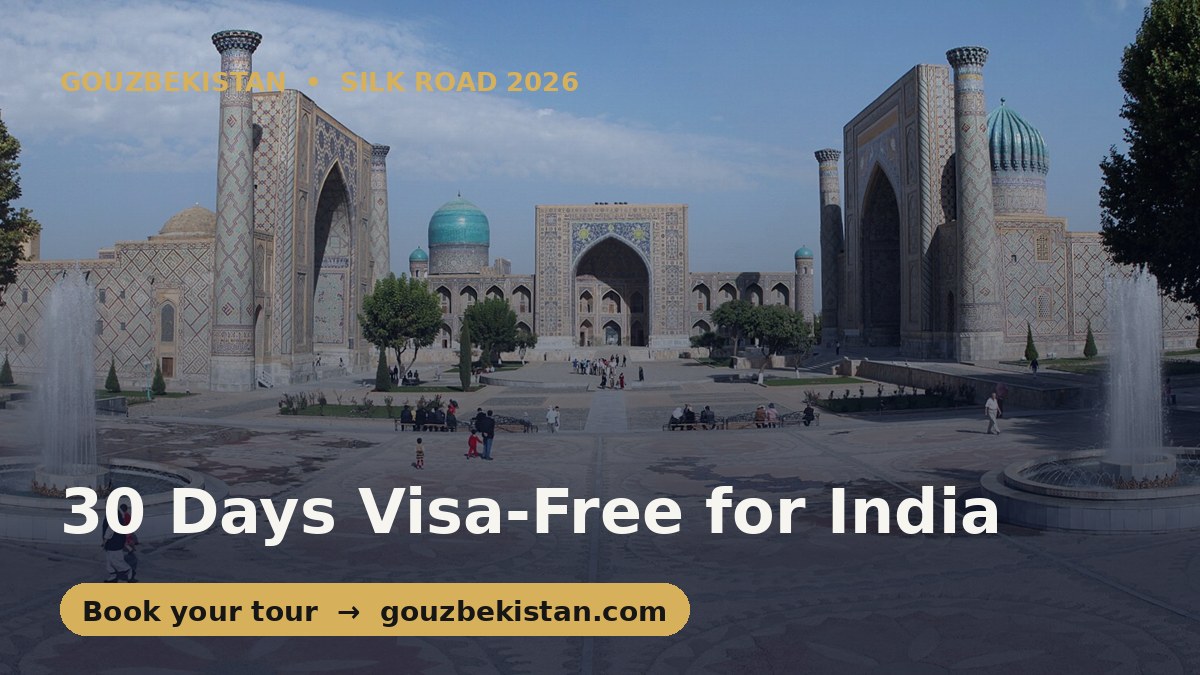
Read moreUzbekistan announced a 30-day visa-free regime for Indian citizens, and a new tourism roadmap covers weddings, films and fashion. Here is what Indian travellers need to know, from entry rules to Babur's birthplace in Andijan....
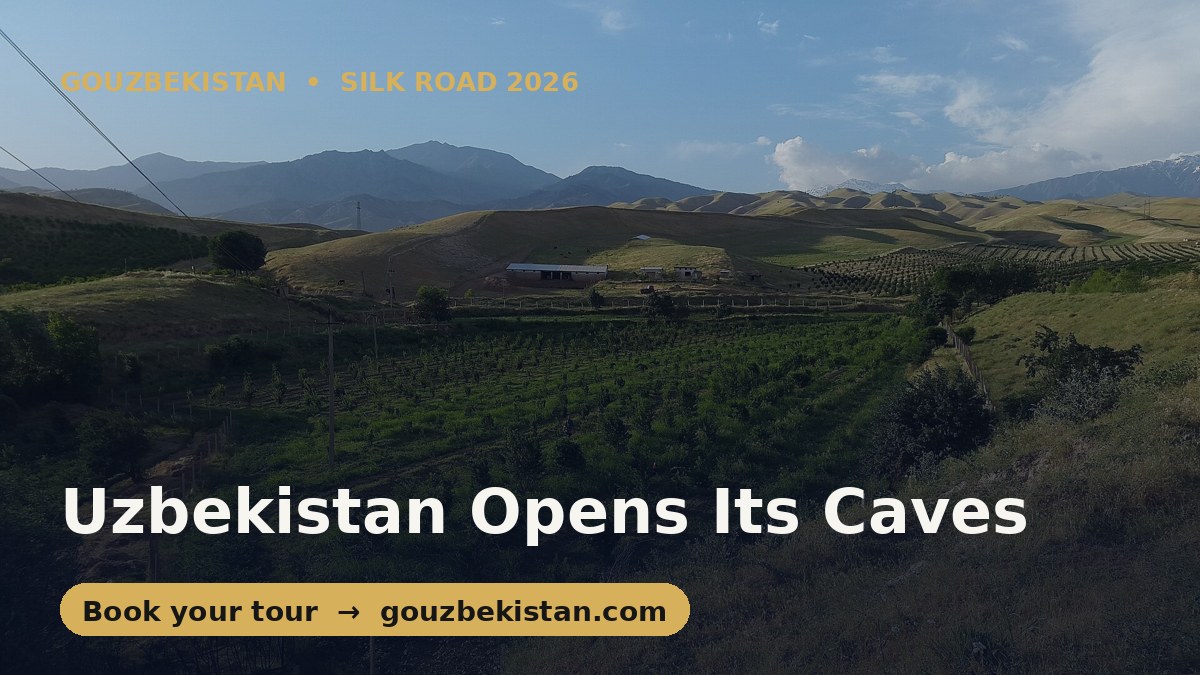
Read moreUzbekistan has approved a plan to open nine caves and the Khojaikon salt mine to tourists, including Teshik-Tash, where a Neanderthal child was found in 1938. What is planned, when, and how to add the south to your Silk Road trip....
Read more
Having trouble deciding on the right option?
We have experienced managers who will help you choose the perfect tour.