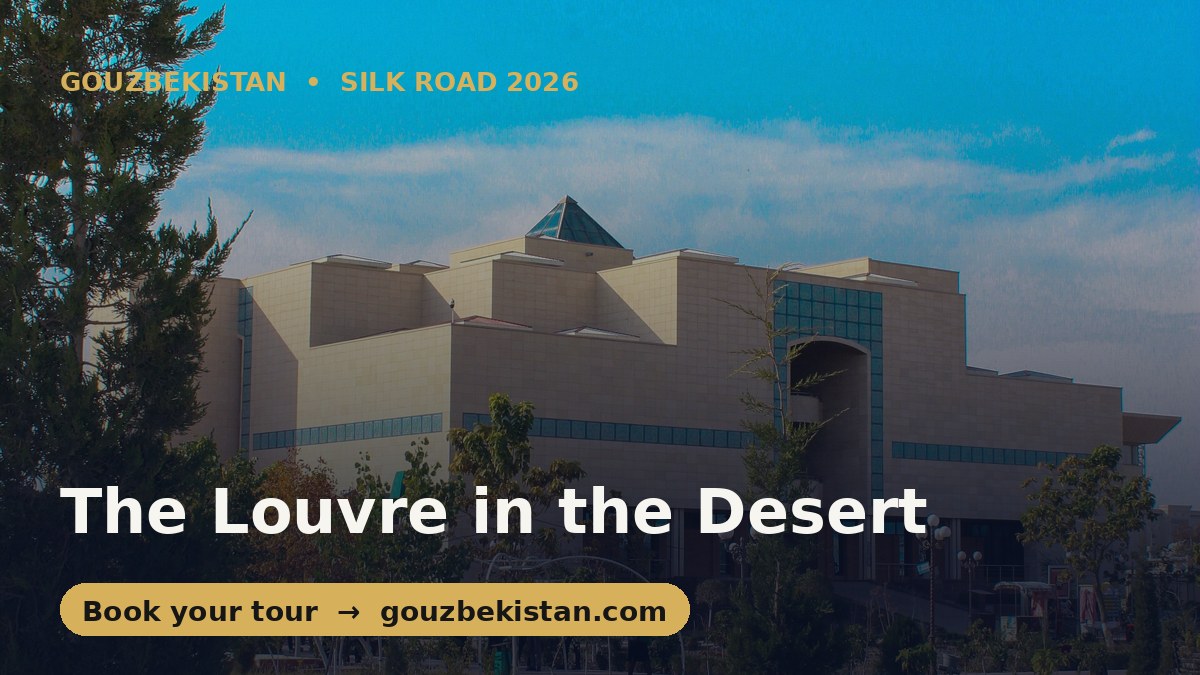
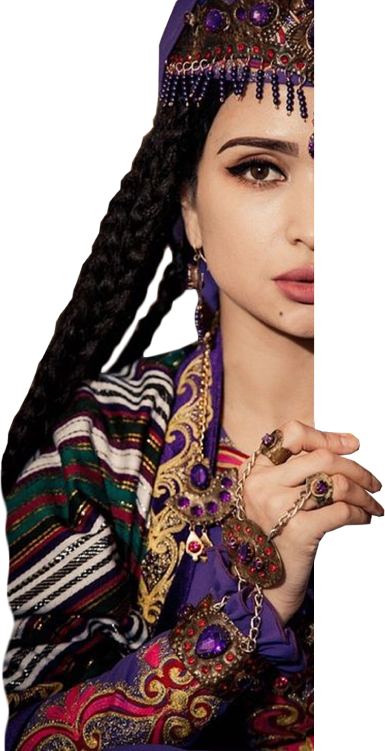
The Savitsky Museum in Nukus, capital of the Republic of Karakalpakstan in north-western Uzbekistan, holds more than 100,000 exhibits – from Russian avant-garde paintings to 4,000-year-old relics of ancient Khorezm – and is best visited on a Silk Road tour that combines Nukus, the Aral Sea region and Khiva. Travellers from Germany, Austria and Switzerland can enter Uzbekistan visa-free for up to 30 days, which makes this remote "Louvre in the Desert" easier to reach than ever.
Picture it: outside, the flat, wind-swept steppe of Karakalpakstan stretches towards the horizon. Inside, a gallery bursts open like a sunrise – canvases in radiant orange, cobalt blue and green, painted by artists who dared to experiment in the early 20th century. A few rooms further on, carved wooden guardians, embroidered nomad garments and weathered pottery from a civilisation that flourished long before our era. Few museums anywhere let you travel from the Bronze Age to the revolution of colour in a single afternoon.
Usbekistan Reise for art lovers: who was Igor Savitsky?
The museum was founded in 1966 by the Moscow artist Igor Savitsky, who first came to Karakalpakstan in the 1950s as part of an ethnographic expedition. He fell in love with the desert landscapes and local traditions – and began collecting. What started as an effort to preserve Karakalpak crafts grew into a remarkable rescue mission: Savitsky gathered more than 80,000 pieces himself, including archaeological finds, folk textiles and paintings by banned or forgotten artists whose work would otherwise have been lost.
Today the State Museum of Arts named after Savitsky holds more than 100,000 exhibits. The New York Times and The Guardian gave it the nickname that still draws travellers across the desert: "The Louvre in the Desert". In 2024 alone, the museum welcomed over 50,000 visitors, including more than 11,000 from abroad (source).
Three worlds under one roof: avant-garde, Karakalpak folk art and ancient Khorezm
The collection is divided into three main sections:
- Fine Arts – the famous avant-garde paintings: faces of women and farmers, steppe landscapes and scenes of daily life.
- Folk and Applied Arts of Karakalpakstan – jewellery, embroidered clothing and carved wood from nomadic families, in the deep red, turquoise and gold of the desert.
- Ancient Khorezm Art – tools, pottery and everyday objects that have survived for four thousand years. The archaeologist Sergey Tolstov, who led the famous Khorezm expeditions, called this land "the Central Asian Egypt".
German-speaking visitors often feel a special connection: after Uzbekistan's independence, the museum's exhibitions travelled to Germany, the Netherlands and Italy, including large-scale shows in Florence and Venice that drew international acclaim. Seeing the collection in its own desert home is a completely different experience.
Seidenstraße Rundreise: combining Nukus with Khiva and the Aral Sea
Nukus is the natural gateway to Uzbekistan's far north-west. A well-planned route links the museum with the desert fortresses of ancient Khorezm, the former fishing port of Muynak on the dried-up Aral Sea, and the walled old town of Khiva. Our Ustyurt Plateau and Muynak tour takes you into this dramatic landscape, while the 10-day Grand Silk Road tour covers the classic cities of Samarkand, Bukhara and Khiva. In Khiva, you can rest at the Fayz Hotel Khiva, a short walk from the old-town atmosphere.
Autumn and spring are especially pleasant for the desert regions, when days are mild and the light is soft – perfect for photographers and culture travellers alike.
Why German-speaking travellers are choosing Uzbekistan now
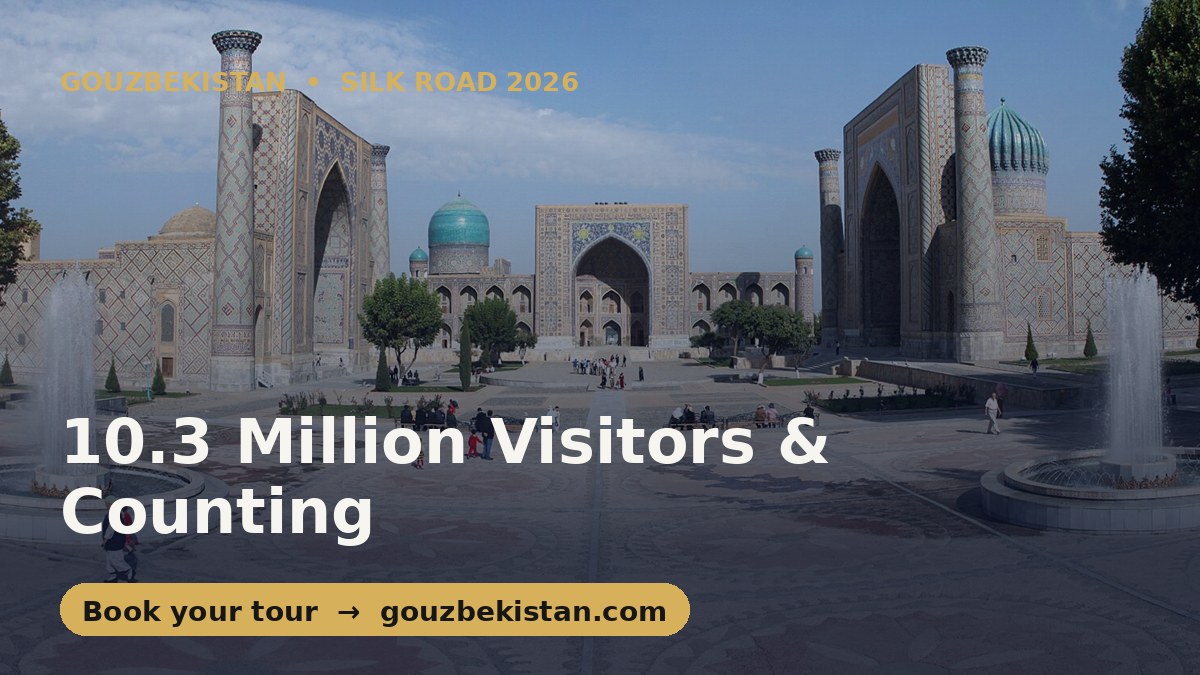
Interest is growing fast. According to Uzbekistan's Committee on Tourism, the number of visitors from Germany rose by 25% in January–September 2026, as the country welcomed 10.3 million foreign tourists in nine months (Trend, 10 October 2026). Visa-free entry for German citizens has applied since January 2019, and Austria and Switzerland are also on the 30-day visa-free list.
GoUzbekistan is a licensed tour operator with offices in Tashkent and Bukhara, operating since 2007. We plan private, small-group and tailor-made journeys – with experienced local guides, comfortable transfers across the long desert distances and hand-picked hotels. Create your own custom tour to the Savitsky Museum and Khiva, or explore our tours. Questions? WhatsApp +998 93 963-00-00 or info@gouzbekistan.com.
Plan your Uzbekistan trip — in your language
العربية
اكتشف السياحة في أوزبكستان: من متحف سافيتسكي في نوكوس، "لوفر الصحراء"، إلى سمرقند وخيوة على طريق الحرير. صمّم رحلتك الخاصة مع منظّم رحلات مرخّص. خطّط لرحلتك الآن
Deutsch
Ihre Usbekistan Reise zum „Louvre in der Wüste“: Das Sawizki-Museum in Nukus, die Oasenstadt Chiwa und Samarkand auf einer Seidenstraße Rundreise verbinden. Visumfrei für bis zu 30 Tage. Jetzt Wunschreise planen
Español
Viajes a Uzbekistán para amantes del arte: el Museo Savitsky de Nukus, el "Louvre del desierto", junto a Jiva y Samarcanda en la Ruta de la Seda. Diseña tu viaje a medida
Français
Voyage Ouzbékistan : découvrez le musée Savitsky de Noukous, le « Louvre du désert », puis Khiva et Samarcande sur la Route de la Soie. Créez votre circuit sur mesure
中文
乌兹别克斯坦旅游新发现:努库斯萨维茨基博物馆被誉为"沙漠中的卢浮宫",可与希瓦、撒马尔罕串联成丝绸之路深度之旅。定制您的行程
Русский
Туры в Узбекистан для ценителей искусства: музей Савицкого в Нукусе — «Лувр в пустыне», древний Хорезм, Хива и Самарканд на Шёлковом пути. Создать свой тур