Around 138 BCE a young Chinese envoy named Zhang Qian rode west out of Chang'an with a hundred men and an impossible errand. He was captured, held for a decade, escaped, and instead of turning for home he kept going — over the Pamirs, down through the passes, until the mountains opened onto a green bowl of a valley where horses grazed that the local people said sweated blood.
He called the place Da Yuan. He went home with almost nothing but a report, and that report changed everything: it gave the Han court its first true map of the West, it started a war over horses, and it opened the road we now call the Silk Road. That valley still exists. It is called Ferghana, it lies in eastern Uzbekistan, and you can be standing in it this season.
Zhang Qian's Report: The Valley That Changed the Han Dynasty
Emperor Wu wanted the heavenly horses — hanxue baoma, the blood-sweating steeds — badly enough that when Da Yuan refused to trade, he sent an army across the desert to take them. The War of the Heavenly Horses, fought between roughly 104 and 101 BCE, is one of the strangest campaigns in Chinese history: an empire crossing two thousand kilometres of sand for a breed of horse.
What Han China got instead was bigger. The road stayed open. Silk went west. Grapes, alfalfa and glass came east. For the next fifteen centuries the caravans that shaped both civilisations moved through exactly the towns you can still walk today — Kokand, Margilan, Rishtan, Andijan — and on to Samarkand and Bukhara.
A Ferghana Valley Tour: Silk, Blue Glaze and the Last Khan's Palace
Ferghana is the part of Uzbekistan most first-time visitors skip, and it is the part that still works with its hands. In Margilan, at the Yodgorlik silk mill, women unwind cocoons in steaming basins and tie the warp threads by eye for atlas and adras ikat — the same technique, the same shimmer, that once travelled the caravan road in the opposite direction from Chinese silk. Nothing is behind glass. You can put your hand in the water.
In Rishtan, potters pull that unmistakable Ferghana blue out of ash glaze made from mountain plants, kiln after kiln, family after family. In Kokand, the Khudayar Khan Palace still wears its tilework like a coronation robe — the last great court of the Ferghana khans, and one of the most photogenic buildings in Central Asia. And above it all sit the same mountains Zhang Qian came over.
Silk Road Tours from China in 2026: Visa-Free, Direct Flights, High-Speed Rail
The practical part has never been easier. Chinese citizens travel to Uzbekistan visa-free for up to 30 days for tourism under the mutual agreement in force since June 2025. Nonstop flights connect Tashkent with Beijing and other Chinese cities on Uzbekistan Airways, Air China and China Southern, and capacity has been expanding steadily as demand has surged — arrivals from China have multiplied several times over in the past two years.
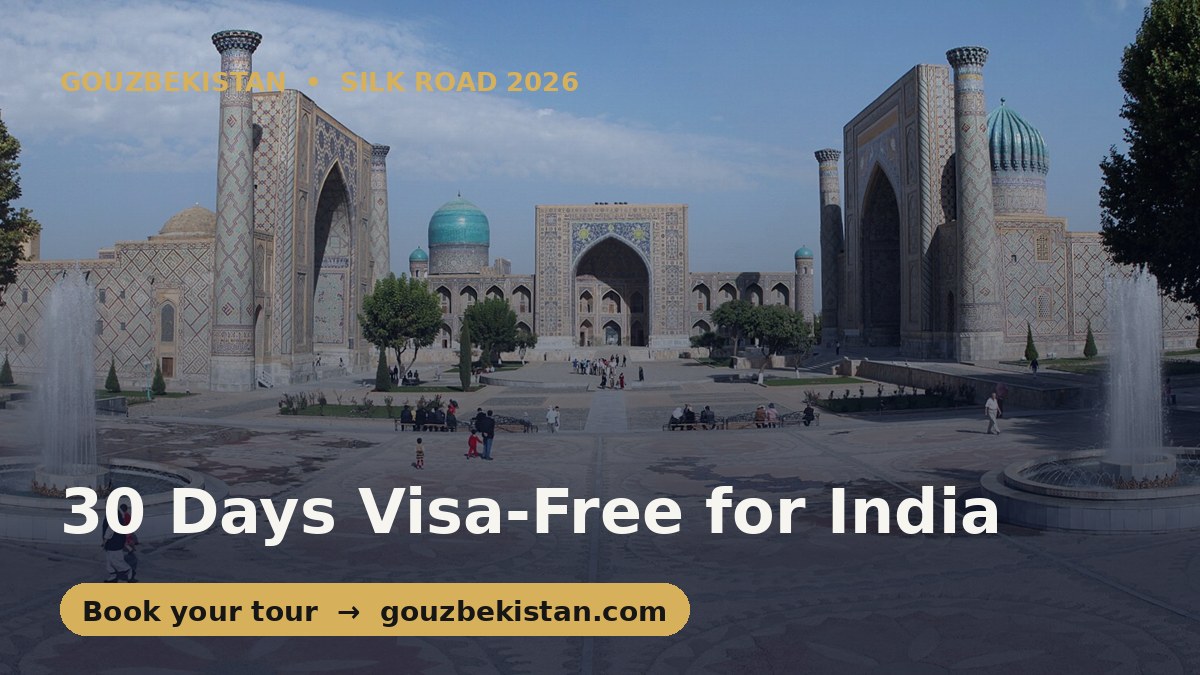
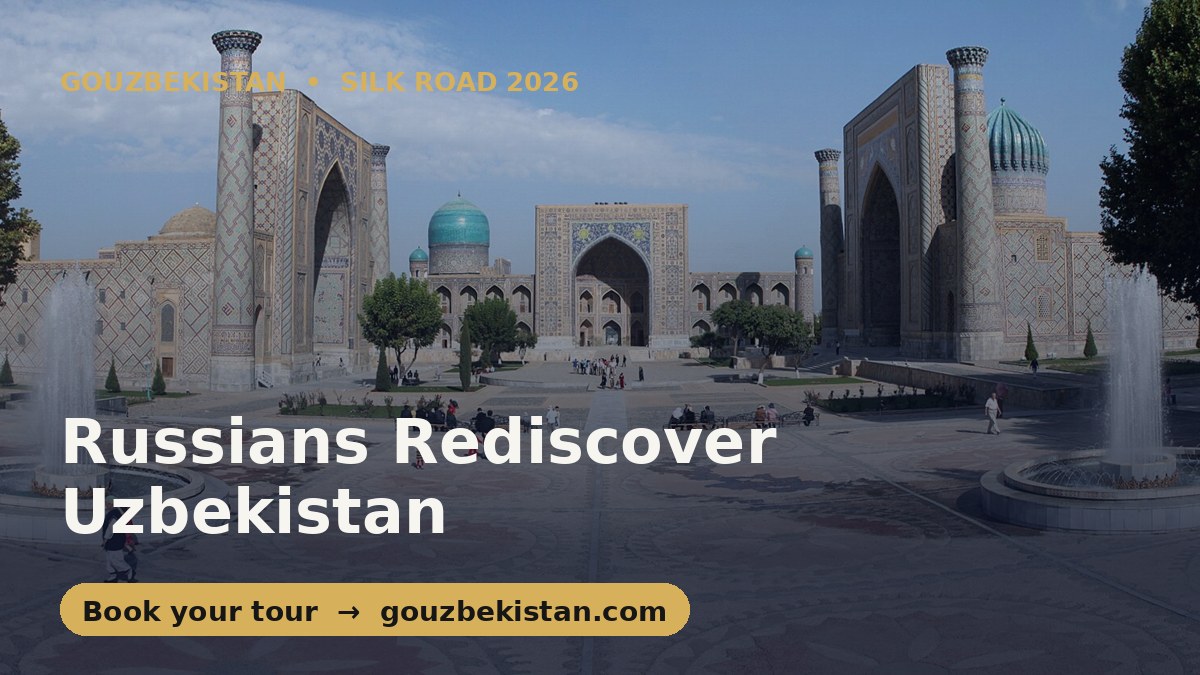
Once you land, the country is small and fast. The Afrosiyob high-speed train puts Samarkand about two hours and fifteen minutes from Tashkent, and Bukhara under four. You can wake up in the Ferghana Valley, stand under the Registan by afternoon, and eat dinner beside a pool in Bukhara that has been there since 1620.
Autumn Is the Right Season — and the Season Books Out
September and October are Uzbekistan's finest weeks: the heat breaks, the light turns amber against the tilework, the pomegranates and melons come in, and the plov tastes like the reason you came. It is also when the trains and the good hotels fill first, which is why we start building September–November itineraries months ahead.
GoUzbekistan is the brand of Lochin Express Plyus LLC, a licensed Uzbek tour operator (licence No. 662280, Committee for Tourism Development) with a team that has been running ground operations here since 2007. We work from Tashkent and Bukhara — not in a foreign office reselling somebody else's programme — which is why we can put a real Mandarin-speaking guide with you, adjust a route the night before, and get you into a workshop that is technically closed.
Ready? Create your own custom tour and tell us how many days you have, or explore our tours to see the routes travellers book most.
Plan your Uzbekistan trip — in your language
中文
两千年前,张骞西行抵达大宛,那里就是今天乌兹别克斯坦的费尔干纳盆地。如今中国公民可免签停留 30 天,北京等城市开通直飞航班,高铁两小时直达撒马尔罕。现在就让我们为您定制一条专属的丝绸之路之旅——定制您的专属行程,或浏览我们的经典线路。
العربية
السياحة في أوزبكستان تبدأ من طريق الحرير: سمرقند وبخارى وخيوة، ومقام الإمام البخاري. دخول بدون تأشيرة لمواطني دول الخليج، وطعام حلال، ومرشدون يتحدثون العربية. صمّم رحلتك الخاصة أو تصفّح برامجنا.
Deutsch
Eine Usbekistan Reise auf der Seidenstraße: Samarkand, Buchara und Chiwa, dazu das Ferghanatal mit seiner Seidenweberei. Visumfreie Einreise für EU-Bürger, Schnellzüge zwischen allen Highlights, deutschsprachige Reiseleitung. Stellen Sie Ihre eigene Rundreise zusammen oder entdecken Sie unsere Touren.
Español
Viajes a Uzbekístán por la Ruta de la Seda: Samarcanda, Bujará y Jiva, con el valle de Ferganá y sus talleres de seda. Entrada sin visado, trenes de alta velocidad y guías en español. Diseñe su viaje a medida o descubra nuestros circuitos.
Français
Un voyage en Ouzbékistan sur la Route de la Soie : Samarcande, Boukhara et Khiva, sans oublier la vallée de Ferghana et ses ateliers de soie. Entrée sans visa, trains à grande vitesse et guides francophones. Créez votre voyage sur mesure ou découvrez nos circuits.
Русский
Туры в Узбекистан по Шёлковому пути: Самарканд, Бухара, Хива и Ферганская долина с её шёлком и керамикой. Без визы, скоростные поезда, гиды на русском языке. Создайте свой тур или посмотрите готовые маршруты.