If you have ever stood beneath the carved cedar ceilings of the Alhambra and felt your breath catch, there is another courtyard waiting for you — three thousand kilometres east, where the same star-tiled geometry climbs even higher into a turquoise sky. Spanish travelers who fall in love with Granada and Cordoba almost always fall, sooner or later, for Samarkand. Uzbekistan is the missing chapter of the story Andalucia began: the Silk Road, the Ruta de la Seda, alive and astonishingly intact.
This is the year to finally go. Spanish citizens travel visa-free for 30 days, new high-speed trains glide between the great cities at up to 250 km/h, and autumn — September and October — is the golden season when the heat softens, the bazaars overflow with pomegranates, and the light turns every dome to honey. For travelers from Madrid, Barcelona, Valencia and beyond, a viaje a Uzbekistan has never been easier, or more moving.
Samarcanda: The Andalusian Soul of the East
Walk into the Registan at dusk and you will understand instantly why visitors compare it to the great Moorish monuments of Spain. The intricate blue-tiled facades, the Islamic geometric patterns, the play of mosaic and muqarnas — they are cousins to the azulejos of Andalucia, born of the same medieval genius for turning mathematics into beauty. But here the scale is breathtaking: three colossal madrasas facing one another across a single square, glowing under the desert stars. For Spanish travelers, Samarcanda does not feel foreign. It feels like a homecoming to a culture you already half-remember.
Bujara and Jiva: Living Pages of the Silk Road
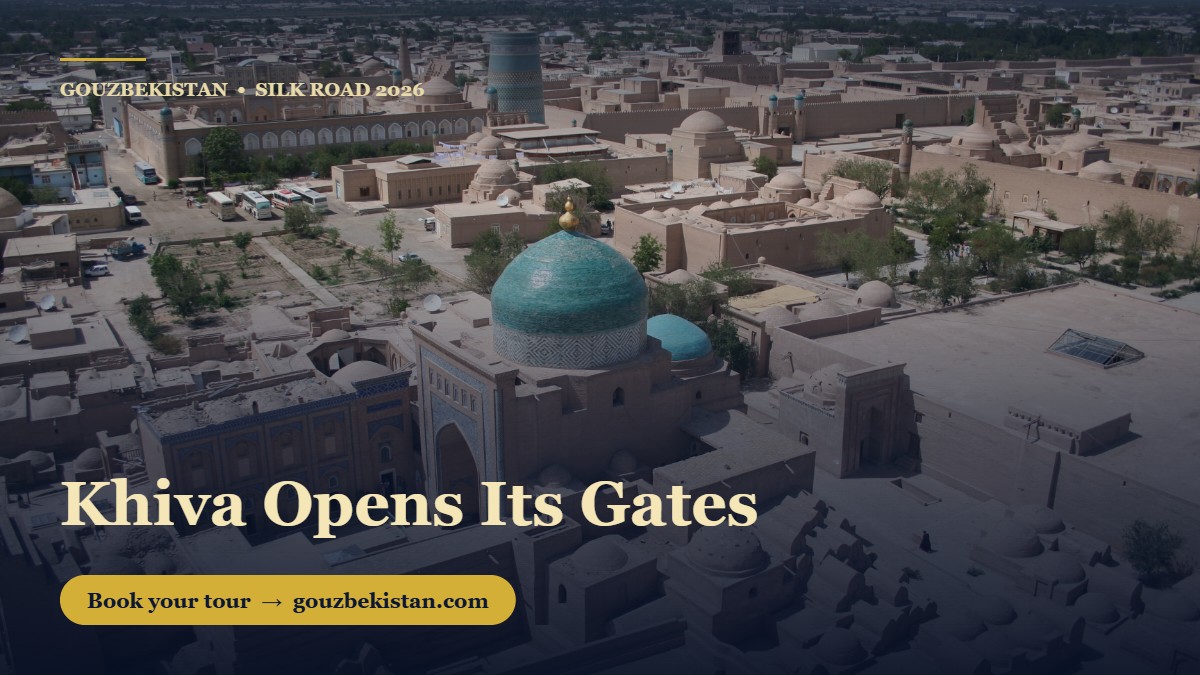
If Samarcanda dazzles, Bujara whispers. Its old town is a labyrinth of medieval madrasas, caravanserais and trading domes where merchants once weighed silk and lapis lazuli, and where artisans still hammer copper and weave carpets by hand today. Further west rises Jiva (Khiva), a walled desert city so perfectly preserved it feels like stepping inside an illuminated manuscript — minarets striped in glazed tile, mud-brick ramparts glowing amber at sunset. These are not museums behind glass. They are streets where families live, where bread is still pulled hot from clay ovens, where the call to prayer drifts over rooftops exactly as it has for a thousand years.
A Journey Made for Spanish Hearts — and Palates
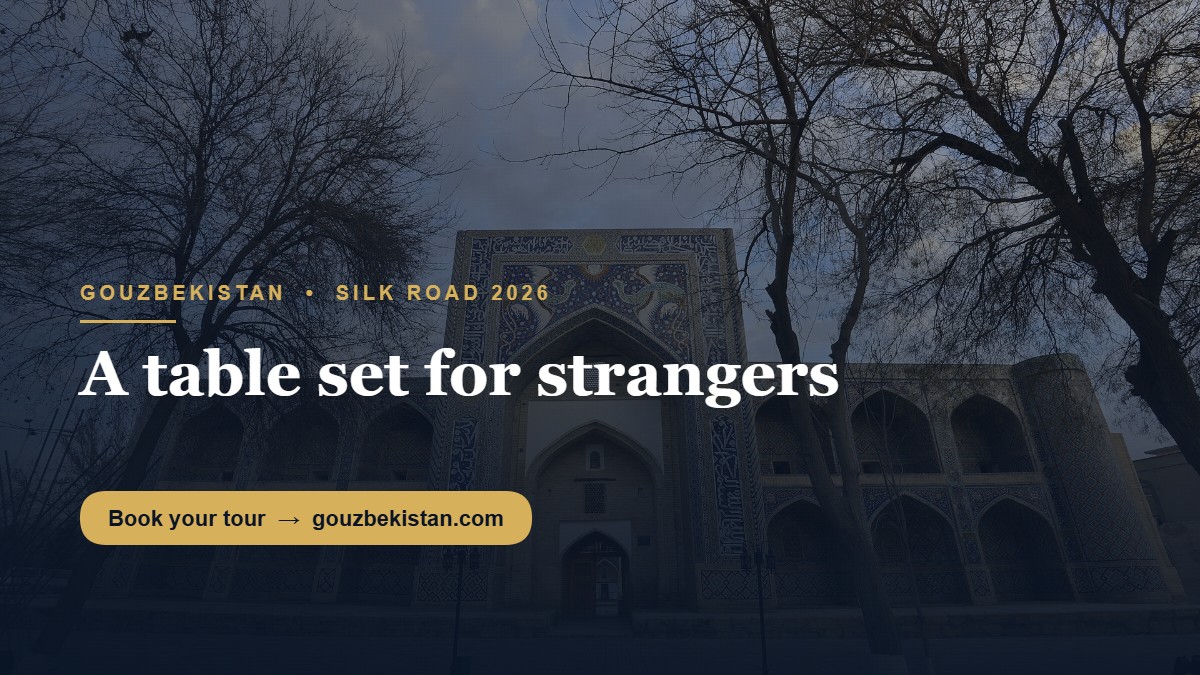
Uzbek hospitality will feel deeply familiar to anyone raised on the long Spanish table. Meals stretch for hours: fragrant plov rice cooked over open flame, skewers of grilled lamb, warm round bread, sweet melon and endless green tea poured by a host who treats every guest as a gift. Markets burst with colour and conversation, much like a Sunday in any Andalusian town. And because Uzbekistan remains remarkably affordable, a level of comfort that would cost a fortune in Western Europe — private guides, boutique heritage hotels, unhurried days — is within easy reach on the Ruta de la Seda.
Why Book Your Ruta de la Seda Now
Uzbekistan is one of the world's fastest-rising destinations, and autumn 2026 departures are filling quickly as Spanish-speaking travelers discover it. The best heritage hotels in Samarcanda and Bujara — the ones inside restored caravanserais and merchant houses — are limited and book out months ahead. As a licensed Uzbek tour operator (DMC) based on the ground, GoUzbekistan crafts journeys that go beyond the standard circuit: private Spanish-friendly guides, the hidden courtyards most tours miss, and the flexibility to travel at your own rhythm.
Granada gave you the first taste. Samarcanda is where the story was written. This is the year to follow the Silk Road to its source.
Ready to begin? Create your own custom tour tailored to your dates, pace and dreams — or explore our tours to find the Silk Road journey that calls to you. Te esperamos en la Ruta de la Seda!